Fabián Jaksic Andrade
The first ecologist to win the National Prize for Natural Sciences, and the one who made sure ecology in Chile split from environmentalism so it could be a science.
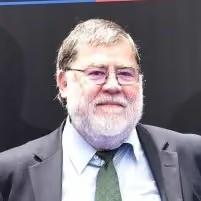
"Ecology has nothing to do with dogma," said Fabián Jaksic the year he won the Premio Nacional (Chile's National Prize). "So the first thing we had to do as ecologists was distinguish ourselves from environmentalists or conservationists."
The remark sounds like a turf war, but it is something else: a description of how a discipline gets founded. For ecology to exist in Chile as a science — with funded projects, publications and peer review — someone had to separate it from the cause the country confused it with. In 2018 Jaksic became the first ecologist to receive the Premio Nacional de Ciencias Naturales (Chile's National Prize for Natural Sciences).
Two years of veterinary studies and a detour
He was born in Punta Arenas and attended that city's Escuela Industrial. Between 1970 and 1971 he studied Veterinary Medicine, and from 1972 switched to a Biology degree at the Universidad de Chile. He earned his Ph.D. in Zoology at the University of California, Berkeley: he was the graduate of his cohort who took the least time to complete the doctorate, in under three years.
He is a full professor in the Department of Ecology of the Faculty of Biological Sciences at the Pontificia Universidad Católica de Chile. He works on community ecology, guild structure, predator-prey interactions, biodiversity and invasive species.
Born in Punta Arenas
Attended the city's Escuela Industrial.
Veterinary Medicine
Biology degree
Universidad de Chile.
Ph.D. in Zoology
University of California, Berkeley, in under three years.
Eighteen Fondecyt projects
Principal investigator on six of them, funded by Chile's national science-funding agency.
Guggenheim Fellowship
Fulbright Senior Scholar
And Honorary Fellowship from the University of Wisconsin.
Drives the founding of the Sociedad de Ecología de Chile
Cátedra Presidencial de Ciencias
Chile's Presidential Science Chair award.
Senior Ecologist
Ecological Society of America. The only South American to hold that distinction.
Premio Nacional de Ciencias Naturales
First ecologist to receive it.
Corresponding Member of the Academia Chilena de Ciencias
Ecologists, not environmentalists
Ecologists act like every other scientist, in the sense that we live off projects, publish in journals and are reviewed by our peers.
Fabián Jaksic, Sociedad de Biología de Chile, 2018, translated from Spanish
His definition of the profession is deliberately sober: "Ecologists are biologists who work at a fairly high level of organisation; we start with organisms, populations, communities and ecosystems." No causes, no slogans: a scale of observation.
On the Premio Nacional he was just as direct: "it is a recognition of a career, and it has to do, fundamentally, with the merit of doing science." And on the difficulty specific to his discipline — the one that makes it awkward for funding systems —: "ecological studies require long periods of analysis and observation."
One of the reasons we do science is to get ahead of things that are going to happen.
Fabián Jaksic, translated from Spanish
A society, a centre and a school
- In 1992, back in Chile, he drove the founding of the Sociedad de Ecología de Chile (Chile's Ecological Society).
- He led the founding of the Centro de Estudios Avanzados de Ecología y Biodiversidad (CASEB), today the Centro de Ecología Aplicada y Sustentabilidad (CAPES).
- He took part in eighteen Fondecyt projects between 1986 and 2013, as principal investigator on six.
- He is the only ecologist in South America recognised as a Senior Ecologist by the Ecological Society of America.
- In awarding him the prize, the Ministry of Education noted that he "contributed to creating a school of ecology and biodiversity in our country."
What the sources do not quite settle
He was born in Punta Arenas and in 2018 became the first ecologist to receive the Premio Nacional de Ciencias Naturales.
His own university, the Ministry of Education, the Universidad de Chile and the Magallanes press agree.
He was born in 1952.
The sources disagree here. His own university explicitly says 1953. But two 2018 pieces of coverage — the Ministry of Education and La Prensa Austral — give his age that year as 66, which points to 1952, and Wikipedia gives 9 July 1952. Three sources against one, but the one that says 1953 is the institution he works at. Without a signed CV, it stays open.
He graduated as a biologist in 1977 and joined the Universidad Católica in 1982.
Both years appear only on Wikipedia. No institutional source confirms them: the Universidad Católica says he started Biology in 1972, without giving a graduation year.
The quotes on this page come from an interview with the Sociedad de Biología de Chile (2018) and from coverage by La Prensa Austral.
Each group comes from a single interview, with no second source repeating them verbatim.
- Pontificia Universidad Católica de Chile. Perfil oficial de Premios Nacionales de su universidad
View source → - Ministerio de Educación de Chile. Anuncio del Premio Nacional de Ciencias Naturales 2018
View source → - Sociedad de Biología de Chile (2018). Entrevista: de la ecología al Premio Nacional
View source → - La Prensa Austral. Cobertura desde Magallanes, con su paso por la Escuela Industrial
View source → - Universidad de Chile. Ficha de la universidad donde se licenció
View source →
How to cite
This is free to reuse under CC BY 4.0, as long as you give credit.
FísicaEterna. (2026). Fabián Jaksic Andrade — biography, FísicaEterna. Retrieved [access date] from https://www.fisicaeterna.cl/en/biographies/fabian-jaksic
@misc{fisicaeterna_fabian_jaksic,
  author  = {FísicaEterna},
  title   = {Fabián Jaksic Andrade — biography, FísicaEterna},
  year    = {2026},
  url     = {https://www.fisicaeterna.cl/en/biographies/fabian-jaksic},
  note    = {CC BY 4.0}
}