Grete Mostny Glaser
She arrived in Valparaíso in 1939 fleeing Nazism, with a doctorate in Egyptology and no plan. She ended up directing the National Museum of Natural History for eighteen years.
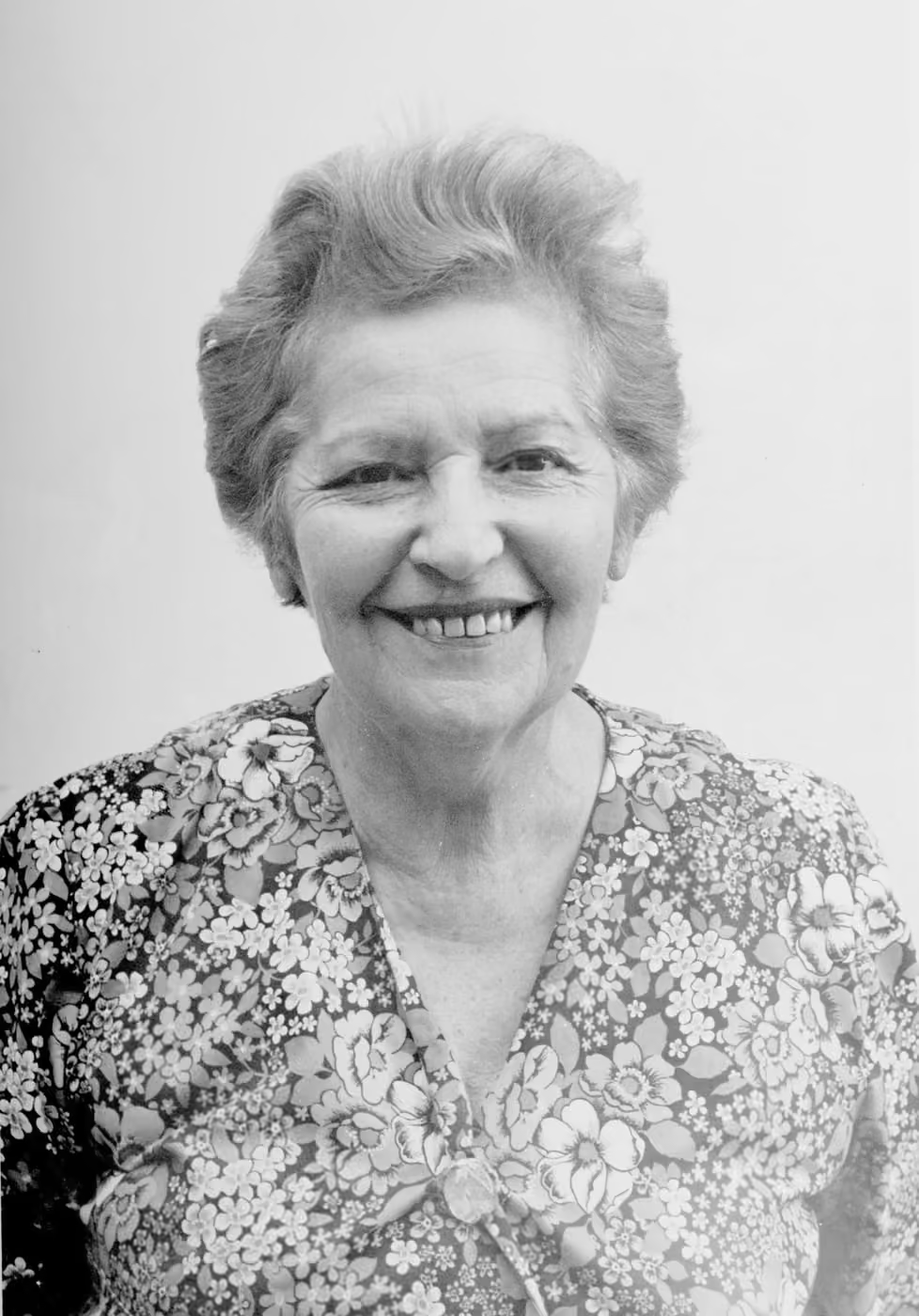
In 1937 she had to leave the University of Vienna. She was Jewish and Nazism was advancing. She finished her doctorate in Brussels in 1939 and that same year arrived at the port of Valparaíso with her mother and her brother Kurt, four years her junior. She was twenty-five.
She joined the Museo Nacional de Historia Natural as soon as she arrived and never left: she directed it between 1964 and 1982, the first woman to do so.
The Egyptologist who wanted to study the Americas
She was born in Linz on 17 September 1914. She enrolled in the Faculty of Philosophy at the University of Vienna in the autumn semester of 1933, and her dissertation —Die Kleidung der aegyptischen Frau im alten Reich, on the dress of Egyptian women in the Old Kingdom— was approved on 10 December 1937 by the Egyptologist Wilhelm Czermak and the archaeologist Camillo Praschniker.
But she could no longer graduate there. She finished her studies at the Free University of Brussels and earned her doctorate in Oriental Philology and History in 1939. In a 1945 interview, shortly after arriving, she made clear the detour did not trouble her much.
In Egyptology. And yet, it's curious: my idea was always to study the cultures of the Americas.
Grete Mostny, 1945 interview, on what she had earned her doctorate in, translated from Spanish
Forty-three years at the same institution
Arrives in Valparaíso
As a refugee, fleeing Nazism. She joins the Museo Nacional de Historia Natural as an assistant in the Anthropology Section, under the direction of Ricardo Latcham.
Head of the Anthropology Section
A post she held until 1964.
Chilean citizenship
She was also a professor at the Universidad de Chile: cultural anthropology, American and Chilean prehistory.
The Cerro El Plomo Child
The museum receives the Inca mummy found on the summit. Mostny leads its study.
Creates the Noticiario Mensual (Monthly Bulletin)
To publicise the museum's activities.
Director of the museum
The first woman in the post. She held it until 1982.
Founds the Juventudes Científicas de Chile
Chile's Scientific Youth movement, and from it, in 1970, the Feria Científica Juvenil (Youth Science Fair).
Centro Nacional de Museología
A pioneering institution in Latin America; it operated until 1974.
Los museos de Chile
The country's first survey of museums: it recorded 68 institutions.
Dies in Santiago
On 15 December, aged 77.
What she is really remembered for
The discovery of the Cerro El Plomo Child is what makes the headlines, but her longest-lasting mark lies elsewhere. She chaired the Chilean National Committee of ICOM between 1966 and 1982, took part in creating the Asociación de Museos de Chile in 1959, and was the Chilean representative of the Asociación Latinoamericana de Museología.
And above all, she founded the Juventudes Científicas de Chile in 1967 and the Feria Científica Juvenil in 1970, which opened the museum to students instead of leaving it as a showcase for specialists. Her personal archive, opened in 2022, holds more than 14,000 documents dated between 1937 and 1985.
this Austrian by birth, but utterly Chilean at heart
Nieves Acevedo, curator of Anthropology at the MNHN, on the centenary of her birth (2014), translated from Spanish
- First woman to direct the Museo Nacional de Historia Natural.
- Author of Culturas precolombinas de Chile (1954), Peine, un pueblo atacameño (1954), Prehistoria de Chile (1971), Los museos de Chile (1975) and Arte rupestre chileno (1983).
- Drove the Primeras Jornadas Museológicas, which brought together a hundred museum workers.
- Since 2013 a university prize has borne her name.
What the sources do not quite settle
She was born on 17 September 1914 in Linz and died on 15 December 1991 in Chile.
The University of Vienna's commemorative archive gives both dates, matching the English Wikipedia.
She directed the Museo Nacional de Historia Natural between 1964 and 1982.
Memoria Chilena and the museum itself agree.
She died of cancer.
Only the University of Vienna's commemorative archive specifies this. No Chilean institutional source confirms it.
Before Chile she worked at the University of Milan and in French museums.
This appears in a single popular-science source. Institutional sources —the museum, Memoria Chilena, the University of Vienna— describe a direct journey from Europe to Valparaíso in 1939.
She married Juan Gómez Millas in 1980.
This appears in a single popular-science source; no institutional source mentions it.
- Memoria Chilena · Biblioteca Nacional. Ficha biográfica y su papel en la museología chilena
View source → - Museo Nacional de Historia Natural. Ficha institucional con los años exactos de sus cargos
View source → - Museo Nacional de Historia Natural. Entrevista de 1945, recuperada del archivo
View source → - Universität Wien · Gedenkbuch. Archivo universitario: fechas, tesis y salida de Austria
View source → - Servicio Nacional del Patrimonio Cultural. Su archivo personal: más de 14.000 documentos
View source →
How to cite
This is free to reuse under CC BY 4.0, as long as you give credit.
FísicaEterna. (2026). Grete Mostny Glaser — biography, FísicaEterna. Retrieved [access date] from https://www.fisicaeterna.cl/en/biographies/grete-mostny
@misc{fisicaeterna_grete_mostny,
  author  = {FísicaEterna},
  title   = {Grete Mostny Glaser — biography, FísicaEterna},
  year    = {2026},
  url     = {https://www.fisicaeterna.cl/en/biographies/grete-mostny},
  note    = {CC BY 4.0}
}