Juan Noé Crevani
Chile was the first country in the Americas to eradicate malaria. He eradicated it.
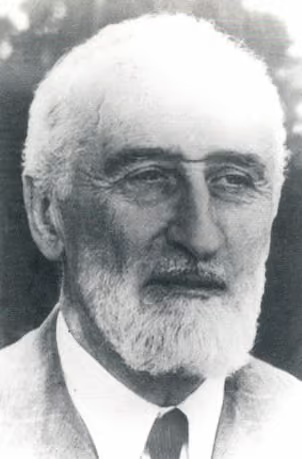
Wiki ICBM · Wikimedia Commons · CC BY-SA 4.0
In 1936, 62.4% of conscripts posted to Arica contracted malaria in the city itself. It was estimated that nine out of every ten inhabitants of Tacna and Arica suffered from it. In health terms, northern Chile was a lost cause.
Nine years later there was not a single locally acquired case left. Chile became the first country in the Americas to eradicate malaria, and the campaign was led by an Italian parasitologist who had arrived in 1912 to teach zoology.
Brought in to reform medical teaching
Born in Pavia in 1877, Noé earned his doctorate in Natural Sciences from the University of Rome in 1898 and in Medicine in 1902. He studied parasitology and malaria under Giovanni Battista Grassi, the man who had described the parasite's full life cycle in the Anopheles mosquito.
In 1912, the dean Vicente Izquierdo Sanfuentes contacted him on behalf of the Chilean government to reform the teaching of medicine. He gave his inaugural lecture on 12 December that year and founded the chair of Medical Zoology at the Universidad de Chile. He ended up also teaching general biology, embryology, comparative anatomy, parasitology and histology.
life is action, movement and dynamism and not death. It must be approached in its function and in its many correlations with the internal and external environments, in a calm study of nature.
Juan Noé, on his approach to biology, translated from Spanish
From the lecture hall to the marsh
From 1913 he began studying malaria in Tarapacá, Arica and the valleys of Tacna. It was no theoretical problem: malaria was depopulating the north, made farming in the Azapa and Lluta valleys unviable, and turned military service into a lottery.
The decisive campaign began in 1937 and attacked on every front at once: draining pools and marshes, oil spread over stagnant water, river channelling, a mounted anti-malaria brigade, Gambusia fish that eat the larvae, and, from 1944, also DDT.
In 1945 the last focus, in the Tarapacá ravine, was stamped out. Noé died two years later, on 22 January 1947, in Santiago. He had also researched miner's anaemia — hookworm disease — in the Biobío coal-mining region.
An avenue, a hospital and a school
If it were not for him, nobody would be living here in Arica.
Luis Carlos Sopetti, resident of Arica, translated from Spanish
- Founded the chair of Medical Zoology at the Universidad de Chile in 1912.
- Published the "Apuntes de zoolojía médica" (1913) and a parasitology text (1922).
- Co-founded the journal "Biológica" in 1944.
- In Arica, an avenue, a housing estate, the Regional Hospital and a bicentennial secondary school bear his name. There is also a public monument listed with the National Monuments Council.
What the sources do not quite settle
He died on 22 January 1947 in Santiago.
The Museum of Medicine, the National Monuments Council and the Spanish-language Wikipedia agree.
From April 1945 no locally acquired cases of malaria were detected in Chile.
Figure recorded in the academic studies on the anti-malaria campaign in Arica.
He was born on 27 April 1877.
Every source gives the year; the exact day appears only in the Spanish-language Wikipedia. The Museum of Medicine and the National Monuments Council record only "1877".
He received Bolivia's Cóndor de los Andes decoration.
It appears in a single source and could not be corroborated in any other.
- Museo de Medicina de Chile. Ficha biográfica institucional
View source → - Consejo de Monumentos Nacionales. Monumento público en Arica
View source → - Revista Médica de Chile · SciELO. Su papel en el nacimiento de la biología celular en Chile
View source → - Redalyc. Estudio sobre la campaña antimalárica en Arica
View source →
How to cite
This is free to reuse under CC BY 4.0, as long as you give credit.
FísicaEterna. (2026). Juan Noé Crevani — biography, FísicaEterna. Retrieved [access date] from https://www.fisicaeterna.cl/en/biographies/juan-noe
@misc{fisicaeterna_juan_noe,
  author  = {FísicaEterna},
  title   = {Juan Noé Crevani — biography, FísicaEterna},
  year    = {2026},
  url     = {https://www.fisicaeterna.cl/en/biographies/juan-noe},
  note    = {CC BY 4.0}
}