Justicia Espada Acuña Mena
Chile and South America's first female civil engineer. A life built with calculations, bridges and a courage that never needed to announce itself.
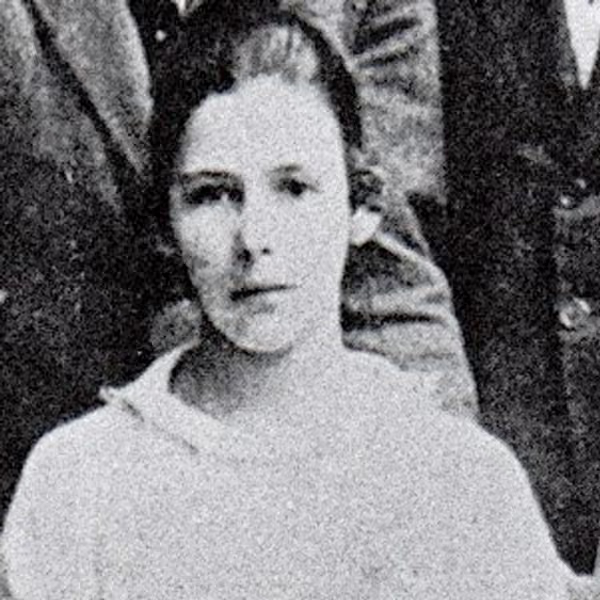
In 1919, when Chilean women still did not have the right to vote and engineering blueprints were an exclusively male territory, a 26-year-old woman crossed the threshold of the Universidad de Chile with her thesis under her arm and received a degree that no one before her — not in her country, nor anywhere in South America — had ever granted to a woman.
Her thesis, titled Proyecto de Resistencia de Materiales ("Materials Resistance Project"), was not merely an exercise in complex mathematical calculation: it was the founding act of women in applied science in Latin America. Her name was Justicia Espada Acuña. And her career proved to be, with geometric precision, exactly what her name promised.
The house of impossible names
Justicia's story begins with a colourful episode. Her father, José Acuña, was the victim of a fraud committed by a man who carried exactly his own name. Seeing the damage the coincidence had caused his reputation and finances, he made a firm decision: he would never give his children names that could be repeated in society.
That is how a lineage of unique, evocative names came about for the eight Acuña siblings, among whom Justicia held third place:
- 1st — Sansón Radical
- 2nd — Australia Tonel
- 3rd — Justicia Espada (her)
- 4th — Tucapel Arauco
- 5th — América del Sur
- 6th — Arquímides Capitán
- 7th — Chile Mapocho
- 8th — Grecia Brasil
Yet beyond the singularity of their names, the Acuña household held an even more unusual philosophy for the period. The father actively encouraged the education and full autonomy of his daughters at a time when such ideas were subversive. In that space of collaboration and mutual respect, gender did not limit ambition. That was the first structure Justicia learned to calculate: one for shaping minds without pre-set moulds.
The conquest of the exact sciences
Justicia completed her secondary studies at the prestigious Liceo de Aplicación in Santiago. After graduating, she initially enrolled in Teaching, the academic path traditionally tolerated and considered suitable by Chilean society at the time for a woman of her standing. However, she did not stay in it for long.
The pull of rigorous logic, materials physics and structural drawing steered her off that course. Driven by genuine vocation, and relying on the historic Decreto Amunátegui of 1877 ("Amunátegui Decree" — the ruling that had legally opened university doors to women decades earlier, though almost none had chosen the exact sciences), she resolved to take a bold step and transfer into Civil Engineering.
In 1912, Justicia Espada Acuña made history by becoming the first woman enrolled in the Faculty of Engineering at the Universidad de Chile. An account preserved in the Archivo Central Andrés Bello (the university's central archive) records with precision the astonishment and great admiration of the academic community:
A moment came when a woman, paying no heed to prejudice and stale customs and carrying no weapon but her brain and her indomitable character, decided to study engineering; she sat the entrance examination, where she was distinguished, and now continues as a student of the School, so that the year 1913 will mark an epoch in the history of the education of women in Chile.
Official chronicle of the period, 1913, translated from Spanish
Among her classmates was a young man of brilliant mathematical ability: Jorge Alessandri Rodríguez, a future President of the Republic of Chile. Those who shared a classroom with her did not remember her for the novelty of her presence in a male setting, but for the fineness of her drawings and the rigorous precision of her calculations.
Seven years later, in 1919, she defended her thesis without a single failure and graduated as a Civil Engineer from the Universidad de Chile without having failed a single subject, becoming the first woman in Chile and South America to achieve such a distinction.
A career built bolt by bolt
In 1920, with her professional qualification in hand, Justicia joined the Empresa de los Ferrocarriles del Estado (EFE) (the State Railway Company). She started out in the most technical tasks as a structural draughtswoman. Over time, she rose through her technical skill to the post of bridge calculator in the company's prestigious Roads and Works Department.
Her 34 years with the railway company were a model of methodical steadiness. In a workplace made up entirely of men, Justicia proved her technical ability through structurally complex projects that still stand and operate across the country today:
Malleco Viaduct
She carried out the strength verification and calculated the reinforcements for the emblematic steel viaduct so it could support much heavier Mikado locomotives.
Tinguiririca Railway Bridge
She designed the shear reinforcements and moments of inertia to adapt the structure to the load requirements of the modern railway.
Stations and Railway Works
She took an active part in the design and structural calculation of the stations at Melipilla, El Monte, San Francisco del Monte, among others.
Various Civil Works
Complex mechanical calculations including the heating system of the Chamber of Senators and the dome of the Parroquia de Nuestra Señora de Lourdes in Santiago.
Today, the Archivo Central Andrés Bello at the Universidad de Chile preserves her original blueprints, calculation notebooks, and reinforcement and moment-of-inertia drawings for the Malleco Bridge, signed in her own hand. They are concrete, mathematical records of the calibre of her daily work.
The woman behind the engineer
While cataloguing her personal archive at the Archivo Central Andrés Bello, the team of archivists uncovered a fascinating dimension. Behind the rigid blueprints and dense moment-of-inertia calculation notebooks lay a rich and complex daily life. Personal letters, intimate poems, photographs of outings and school notebooks revealed a woman who defied the social demand to choose between professional development and personal life.
Justicia was the mother of seven children. After the birth of her first two, she paused her work temporarily to raise them, returning fifteen years later to the Empresa de Ferrocarriles del Estado to resume her role as calculator with the same solidity with which she had stepped away.
Timeline of an exemplary life
An ordered timeline of discoveries, everyday efforts and posthumous honours that reconstructs the historical legacy of one of the continent's most distinguished scientists.
The Decreto Amunátegui
The Chilean government opens university doors to women, laying the legal groundwork Justicia would use decades later.
Justicia Espada Acuña Mena is born
On 14 January, in Santiago de Chile, the third child of the Acuña marriage is born. Her father gave her a name that would, in time, perfectly describe her life.
First woman in the Faculty of Engineering
She leaves Teaching and transfers to Civil Engineering at the Universidad de Chile. She enters a faculty with no bathrooms for women, the only female student among dozens of men.
Historic degree: the first female civil engineer
She defends her thesis, «Proyecto de Resistencia de Materiales», and obtains her degree as a Civil Engineer without having failed a single subject. She becomes the first woman to achieve this in Chile and across South America.
Joins the Ferrocarriles del Estado
She begins her career at the Empresa de Ferrocarriles del Estado as a draughtswoman, starting a career that would last 34 years.
A pause for motherhood
After the birth of her first two children, Justicia steps away temporarily from her professional career to raise them.
Return and rise within EFE
She returns to the Empresa de Ferrocarriles del Estado, this time as a calculator in the Roads and Works Department, where she develops her most important projects.
Retirement at 61
She closes her career at the Ferrocarriles del Estado, the same institution that took her in at the start. She leaves a legacy of works that still exist in the Chilean railway landscape.
Dies in Santiago
Justicia Espada Acuña Mena dies. The Instituto de Ingenieros de Chile (the Institute of Engineers of Chile) creates the Premio Justicia Acuña in her memory, to be awarded every two years to an outstanding woman in the profession.
Gallery of Illustrious Engineers
The Colegio de Ingenieros de Chile (the Chilean Association of Engineers) inducts her into its Gallery of Illustrious Engineers, a recognition she never received from that institution in life.
The tower bears her name
The Faculty of Physical and Mathematical Sciences of the Universidad de Chile renames its central tower in honour of the woman who was the first student in its history.
Google Doodle on her 128th anniversary
On 14 January, Google honours Justicia with a Doodle visible in Chile, Argentina and Peru, designed by artist Hélène Leroux. The world learns her story.
From a lone pioneer to thousands of women engineers
Justicia Espada Acuña's mark is measured not only in the tonnage of the trains that crossed the bridges she calculated, but in the profound transformation of enrolment and representation of women in applied science faculties:
Today, her posthumous honours include induction into the Gallery of Illustrious Engineers of the Colegio de Ingenieros (1981), the creation of the prestigious Premio Justicia Acuña, awarded every two years by the Instituto de Ingenieros to the country's most outstanding woman engineer, and the renaming of the Central Tower of the Faculty of Physical and Mathematical Sciences at the Universidad de Chile in 2018.
Her story marks the beginning of the legitimisation of women in Chilean and Latin American engineering.
Amarí Peliowski, researcher at the Archivo Central Andrés Bello, translated from Spanish
She did not just build bridges of steel and concrete. She built the bridge that joins a Chile where women had no place in engineering with one where they have it by right.
Justicia Espada Acuña Mena · 1893 – 1980, translated from Spanish
Distinctions and honours
- Universidad de Chile — Archivo Central Andrés Bello. Preservación y digitalización del legado documental de Justicia Acuña.
View source → - FCFM Universidad de Chile — Homenaje a la primera ingeniera. Facultad de Ciencias Físicas y Matemáticas de la Universidad de Chile
View source → - EFE Trenes de Chile — Historia ferroviaria y obras estructurales. Empresa de Ferrocarriles del Estado
View source →
How to cite
This is free to reuse under CC BY 4.0, as long as you give credit.
FísicaEterna. (2026). Justicia Espada Acuña Mena — biography, FísicaEterna. Retrieved [access date] from https://www.fisicaeterna.cl/en/biographies/justicia-espada-acuna
@misc{fisicaeterna_justicia_espada_acuna,
  author  = {FísicaEterna},
  title   = {Justicia Espada Acuña Mena — biography, FísicaEterna},
  year    = {2026},
  url     = {https://www.fisicaeterna.cl/en/biographies/justicia-espada-acuna},
  note    = {CC BY 4.0}
}